
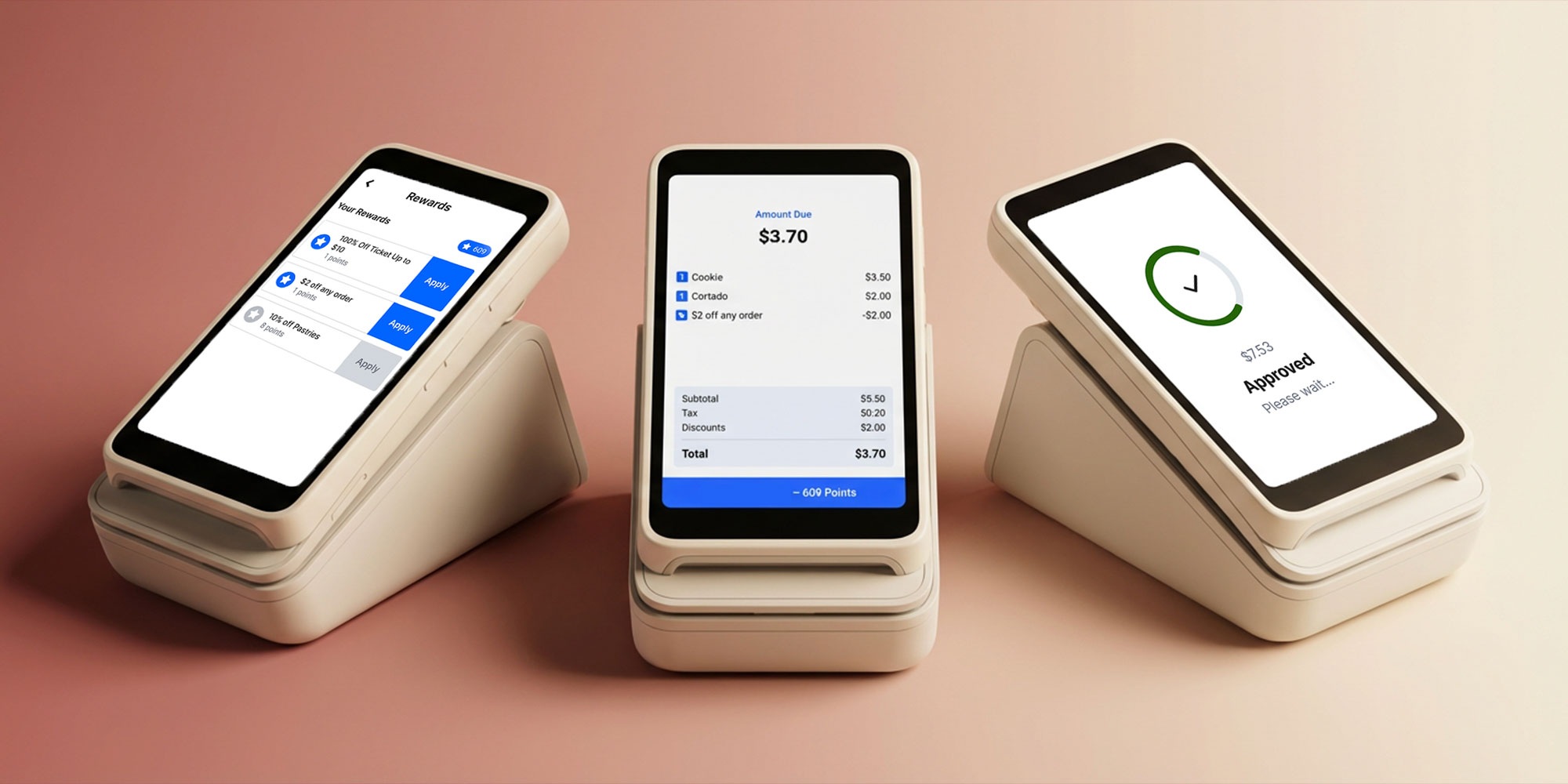
Introducing the Dripos V3 Card Reader

The Dripos V3 Card Reader is officially here and it represents a meaningful step forward in how coffee shops handle in-store payments. At Dripos, our focus has always been helping cafes operate smoothly while delivering great customer experiences. This latest update continues that mission by making payments faster, more stable, and more resilient to connectivity challenges.
Powered by trusted hardware from Stripe, our card readers allow coffee shops to seamlessly accept in-store card payments while benefiting from deeper POS integration and workflow optimization.
What’s new in V3
Faster, more direct connectivity
The new reader architecture relies less on internet bandwidth, creating a more direct connection between the Point of Sale and the card reader. The result is quicker transaction handling and less dependency on network quality.
Improved stability and reliability
Connection consistency has been enhanced across the board, helping reduce interruptions during checkout, especially during busy rushes when every second matters.
Offline payment support
One of the biggest upgrades is offline mode. If your router remains powered but WiFi temporarily drops, you can still accept card payments. When back online customers can manually process transactions, minimizing lost sales and customer frustration.
Refined user experience
We’ve also improved the interface for both staff and customers. A smoother checkout flow means faster service, clearer prompts, and an overall better in-store payment experience.
Designed for coffee shop efficiency
Our goal is simple: optimize your workflow so you can operate as efficiently as possible in store. Payments should never slow down service or create unnecessary friction. With V3, we’re continuing to remove those barriers so you can focus on what matters most - your customers, your team, and your coffee. We asked our Director of Engineering to provide additional context on the update and are excited to share his responses here with you.
What technical changes enabled the reduced bandwidth dependency in V3?
V3 uses something called "Peer to Peer (P2P)" design. Previously, both the V3 reader and the POS needed a connection to servers at all times. This meant that any service interruption would cause huge issues for our customers. This change means that readers are still functional in any kind of internet environment.
How does offline payment processing work securely behind the scenes?
When the internet is temporarily unavailable, card information is securely encrypted and stored by our payment processor, Stripe. The data remains protected and can only be accessed by Stripe’s servers once the device reconnects.Once the device is back online, Dripos automatically queues the offline payment to be processed after the “Process Offline Transactions” flow is completed.For those interested in a technical deep dive, Stripe provides detailed documentation on this process here: https://docs.stripe.com/terminal/features/operate-offline/overview
How did customer feedback influence the UI improvements?
Our customer feedback is always being integrated into our design decisions. Every customer is unique in their workflow, so the most important part of the job for Dripos engineers is understanding what the most important improvements can be made from that feedback. For the Card Reader, for example, we added the Card Reader Action pop up based on customer feedback. This tells the POS the Reader is receiving input from the Patron and should wait before letting further operations occur.