Coffee Shop Trends 2027: What Owners Should Plan For

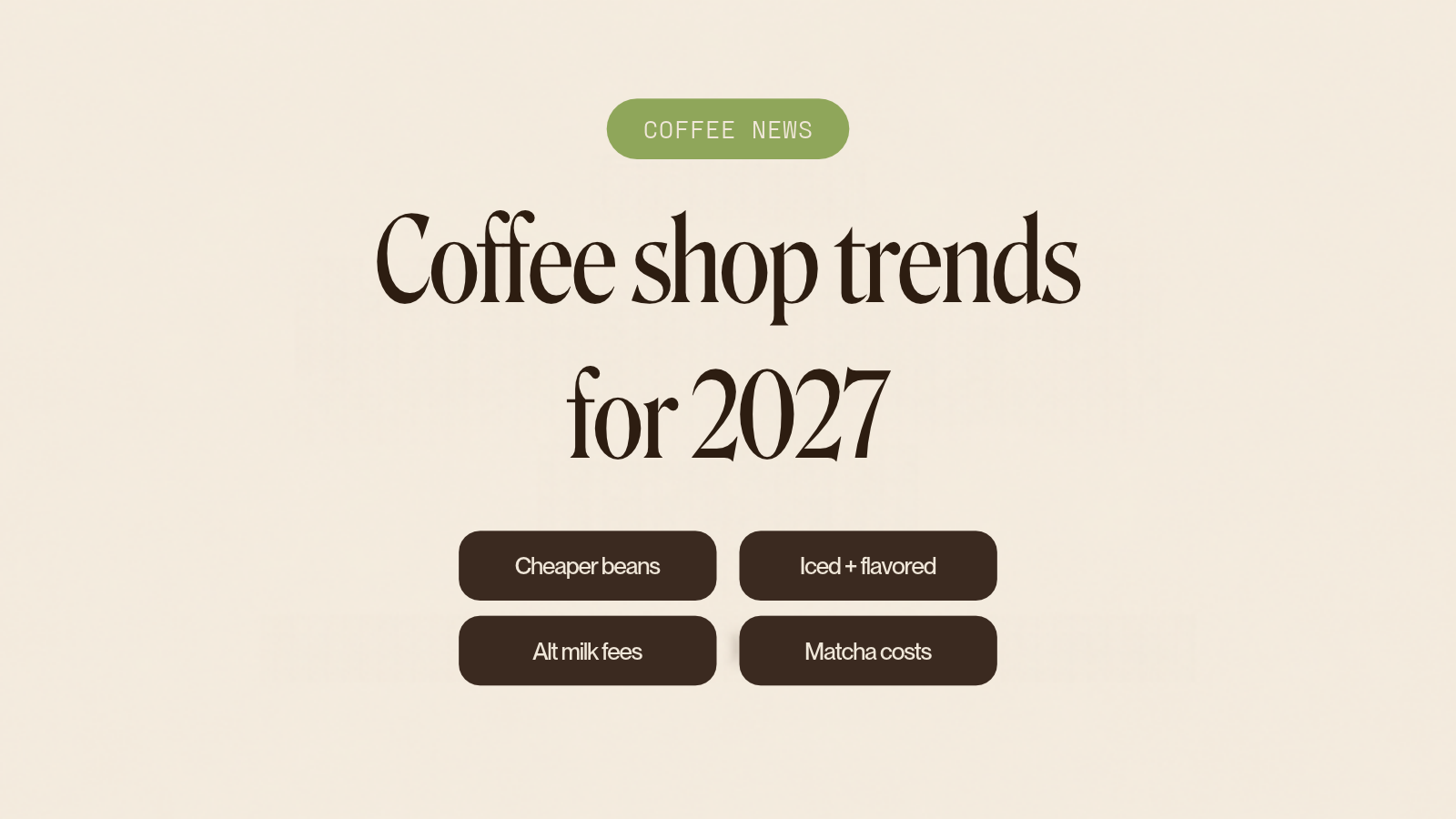
TLDR: The trends that will matter most to independent coffee shops in 2027 are cheaper green coffee (slowly), more chain competition on value, cold and flavored drinks taking a bigger share of the menu, and rising matcha costs. None of them call for a rebrand. Most of them call for an hour with your sales reports and a few menu decisions before January.
About 3% of US coffee shops run on Dripos, and we have processed over $1B in coffee shop payments, so we spend a lot of time looking at what operators are actually selling. Most "trends" lists you'll find are about mushroom lattes and vibes. This one is about what changes your margins and your mornings next year.
Green coffee is getting cheaper, but your invoice will lag
Arabica futures were about $2.77 a pound on November 19, down roughly 32% from a year ago, according to Trading Economics. Earlier this year they were over $4.
The supply outlook points the same way. Icafe's roundup of five forecasts puts 2026/27 world production at a record 187.7 million bags against about 178 million bags of consumption, a 9.7 million bag surplus after four deficit years (Perfect Daily Grind).
Two caveats. ICE arabica stocks just hit a 27-year low, so prices can still jump on a bad weather headline. And your roaster bought the beans in your bag months ago, at older prices, so wholesale prices move slower than futures.
What to do: Ask your roaster when their pricing will reflect the lower market, and whether a 6 or 12 month contract makes sense now. Don't cut menu prices yet. We walked through why in Coffee Prices Are Falling: Should Cafes Cut Menu Prices?
The chains are still growing, and value is the fight
The US branded coffee shop market hit $58.5 billion with about 45,200 outlets in Allegra World Coffee Portal's latest Project Café USA report, and is forecast to pass 57,700 outlets by 2030 (World Coffee Portal). Starbucks, Dunkin', Dutch Bros and 7 Brew each added over 100 locations in that period. Globally, Luckin now has 38,909 stores to Starbucks' 41,607 and could pass it as early as Q1 2027 (Perfect Daily Grind).
You will not win a price war with any of them. You can win on things a chain can't copy easily:
- Speed for regulars. Saved orders, a fast line, and a barista who knows that the 7:40 guy wants a cortado.
- A menu that changes. Chains plan seasonal drinks a year out. You can run a drink next Tuesday.
- Loyalty that feels personal. A punch card is fine. A free drink on someone's 50th visit, with their name on it, is better.
The same report found more than 50 independents grew to five or more locations in a single year. Small is not the same as stuck.
Cold and flavored keep taking share
The National Coffee Association's 2026 specialty report found 47% of American adults had specialty coffee in the past day, tied with last year's record. Among those drinkers, 60% had cold coffee and 35% said flavor is part of what makes coffee "specialty." The top flavors were chocolate, caramel and brown sugar, and vanilla. Adults 25 to 39 are the heaviest specialty drinkers, at 69% in the past week (NCA).
Pricing follows demand. At chains, a 16 oz iced coffee went up nearly 5% over a year while hot drinks went up about 3% (World Coffee Portal).
What to do:
- Pull your product sales by temperature. If iced is over 40% of drinks in December, it will be higher in June.
- Check that iced drinks are priced on their own costs. Cups, lids, and ice machine time are not free.
- Build your 2027 seasonal menu around the flavors people already buy. A brown sugar oat latte will outsell your lavender cardamom experiment. Run the experiment anyway, just not as the headliner.
The alt milk upcharge question is back
18 of the 20 largest US chains no longer charge extra for dairy alternatives, including Starbucks, Dunkin' and Dutch Bros. But more than half of consumers say they'd pay a surcharge for their preferred non-dairy milk, and nearly two-thirds of chain leaders still think customers should pay extra (World Coffee Portal).
So your customers will start asking why you charge for oat milk when Starbucks doesn't. Do the math before you decide. Here's an illustrative example: if you sell 30 oat drinks a day with a $0.75 upcharge, that's about $22 a day, or roughly $8,000 a year. Dropping it is a real cost.
Three options that work:
- Keep it. Most of your customers won't leave over 75 cents.
- Fold it in. Raise all latte prices by 15 to 20 cents and drop the line item. Same money, fewer awkward conversations.
- Lower it. Take it to $0.50 and keep it on house-made or premium milks only.
Whatever you pick, look at your modifier sales report first so you're deciding with your own numbers, not a chain's.
Matcha is getting expensive
Matcha demand has outrun supply. The average price of Kyoto's first-flush tencha nearly tripled from 2024 to 2025, and some more modest grades cost about five times what they did two years earlier (VinePair). Matcha is only about 6% of the tea grown in Japan, and the average farmer there is close to 70.
If matcha is a growing part of your menu, it's probably also your fastest-rising cost.
What to do: Re-cost every matcha drink with your current invoice. If your cost per drink went from $0.50 to $1.00, that's 50 cents straight off the margin of a drink you might be selling 40 times a day. Price matcha drinks separately from your espresso drinks, consider a ceremonial-grade upcharge, and ask your supplier about lead times before spring.
Owners are asking their data questions
The last trend is the one we're closest to. In 2027 more owners will stop scrolling through reports and just ask their numbers a question. Which drinks sell best on rainy days? Which hour is overstaffed on Tuesdays? Did the pumpkin drink bring new people in, or just move regulars to a pricier drink?
In November we shipped the Dripos AI connector, which lets you connect your Dripos reporting data to Claude or ChatGPT. It's read-only, it takes under a minute to set up, and it's included on every plan at no extra cost. Here's how to set up the Dripos AI connector.
It doesn't have to be fancy. Ask it to compare iced vs hot sales by month, or to list your top 10 modifiers by revenue, and you'll have most of the answers this post asks for in about five minutes.
A short 2027 planning list
If you only do a few things before January:
- Ask your roaster about 2027 pricing and contract length.
- Pull iced vs hot sales, and re-cost your iced drinks.
- Decide on the alt milk upcharge with your modifier numbers in hand.
- Re-cost matcha.
- Plan two or three seasonal drinks around flavors your customers already buy.
None of these will take more than an afternoon. If you want help pulling any of the numbers, our support team is in our NYC office and picks up 24/7.