How to Setup Your Coffee Shop’s Back of House and Equipment

Opening a cafe is one of the most exciting things you can do. It’s also one of the most expensive ways to learn a lesson the hard way. This guide is here to help you spend smarter, choose better equipment, and set up a back of house that your team will actually thank you for.
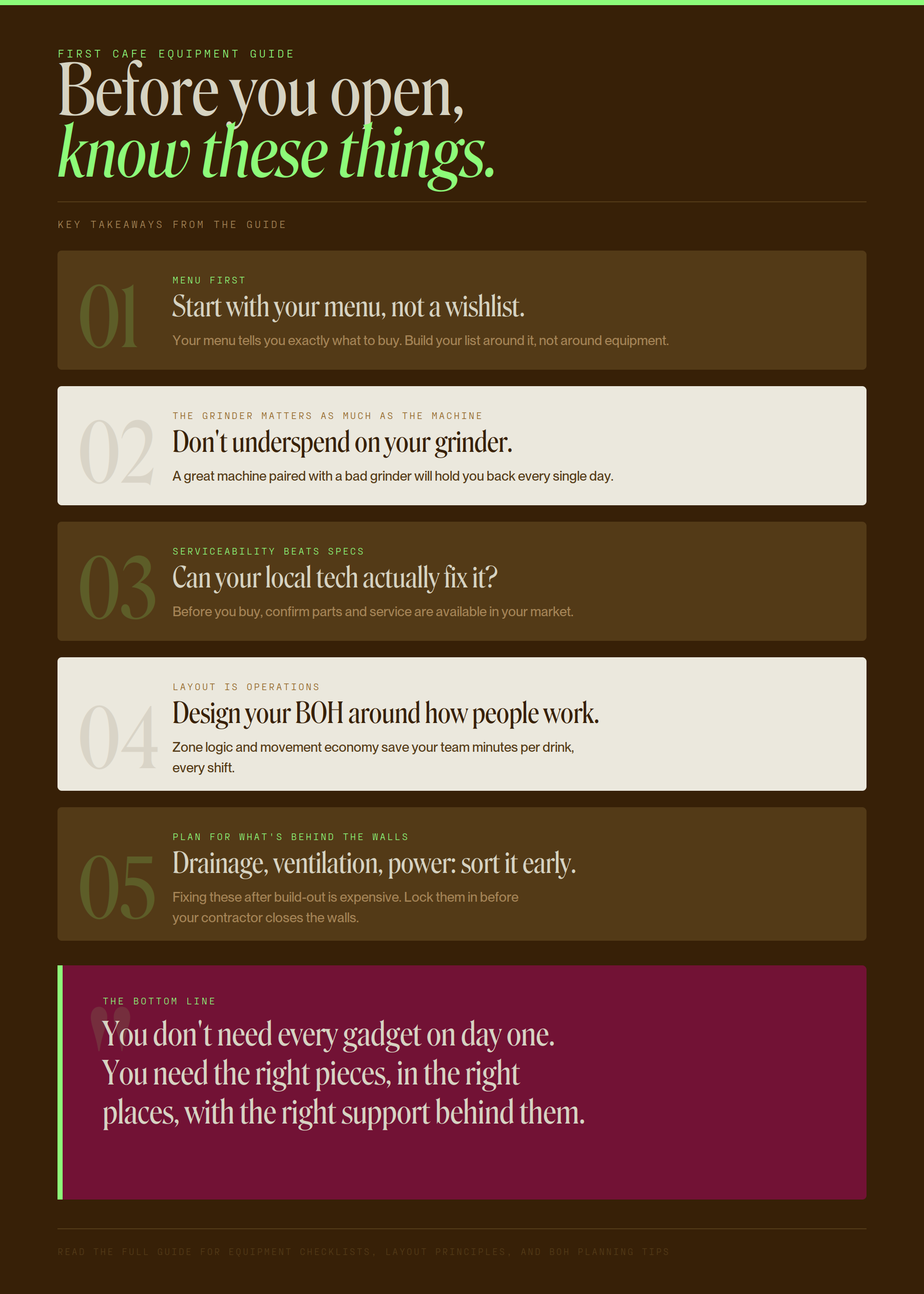
Part one: Start with your menu, not a wishlist
Before you walk into any equipment showroom or open a dealer catalog, write out your full menu. Every item on it. This sounds obvious, but most first-time cafe owners do it in reverse. They fall in love with a piece of equipment, buy it, and then build a menu around it. That’s a costly habit.
Your menu is the blueprint for everything. It tells you what you actually need to produce, at what volume, and in how little time. A simple espresso-and-drip menu has very different equipment needs than one that includes pour-overs, cold brew on tap, nitrogen, and a full pastry program.
Once your menu is locked, you can build your equipment list with intention rather than impulse.
“The most important piece of equipment in your cafe is the one that makes the thing you sell most. Everything else supports it.”
Part two: The equipment that actually matters
Here’s how to think through your core purchases. Not every cafe needs every piece, but these are the decisions that will define your daily operation.
Espresso machine
For most cafes, this is the biggest purchase and the right place to invest. Look for consistent temperature stability, group head reliability, and ease of maintenance. For a two-barista bar, a two-group machine is usually the right call. Three groups if you’re projecting high volume from day one.
The grinder
Don’t underspend here. A mediocre grinder paired with a great espresso machine will hold you back every single day. Look for dose consistency, grind retention, and a burr set rated for commercial volume. Budget for at least one dedicated espresso grinder, and a second for batch or manual if your menu calls for it.
Batch brewer
If drip coffee is on your menu, a quality batch brewer pays for itself fast. Look for SCAA-certified machines that hit proper brew temperature and saturation. A thermal carafe system keeps coffee fresher longer without burning it on a hot plate.
Water treatment
Your local water quality will impact flavor, equipment lifespan, and maintenance costs more than most people expect. A proper filtration and softening setup is not optional. It protects your investment and protects the taste in the cup. Talk to a water specialist before you finalize your equipment plan.
Refrigeration
Undercounter refrigeration keeps your bar tight and your milk within reach. Plan for at least two zones: one for milk and open-bar items, one for backup and prep. Don’t cheap out here. A refrigeration failure during a Saturday rush is not a lesson you want to learn.
Dishwasher and sanitation
A commercial glass washer or undercounter dishwasher is essential if you’re doing any dine-in service. It keeps your bar clean, your cups cycling, and your team from hand-washing at peak hours. Look at high-temp vs. low-temp systems based on your space and local health code.
Tip: Buy new where it matters, buy used where it doesn’t. Your espresso machine and grinder should ideally be purchased new or certified refurbished from a reputable dealer. Refrigeration, shelving, and furniture are good candidates for the used market. Your health inspector will have opinions, so check in with them first.
Part three: What to look for when comparing equipment
Once you’ve narrowed down your category needs, here’s a practical checklist for evaluating any major purchase. Before you sign anything, ask these questions:
- Does your local service technician actually work on this brand? Serviceability matters more than specs.
- What does a standard service call cost, and how often will it need one?
- Are parts stocked locally or do they ship from overseas? Lead time on repairs will affect your operation.
- What’s the warranty, and who services it? Manufacturer-direct vs. dealer warranty terms differ significantly.
- What volume is this machine rated for daily, and does that match your projected output?
- Can you train staff on it without a three-day course? Some equipment has a steep learning curve that slows you down.
- Does your utility supply (water pressure, electrical amperage, ventilation) support this equipment? Confirm with a contractor before purchasing.
- Have you tried the equipment in a live setting? Ask for a demo at a dealer or a working cafe that uses it.
Part four: Setting up a back of house that works
The layout of your back of house will determine how fast your team moves, how many errors get made, and how much energy gets wasted every single shift. Most first-time owners design the front of house first and figure out the back of house with whatever space is left. Flip that.
A good BOH layout is built around three core principles: zone logic, movement economy, and safety compliance.
Principle 1: Zone logic
Espresso and milk steaming belong together. Cold build and grab-and-go belong together. Don’t make a barista cross the bar to get a lid. The key concept is that you don't want one person to need to leave a zone in order to complete a specific task.
Principle 2: Movement economy
Time how long it takes to complete your most-ordered drink from start to handoff. Every unnecessary step is seconds. Seconds become minutes. Minutes become a line out the door.
Principle 3: Safety and compliance
Your health department will have specific requirements for handwashing stations, surface materials, storage heights, and equipment placement. Know these before you design, not after.
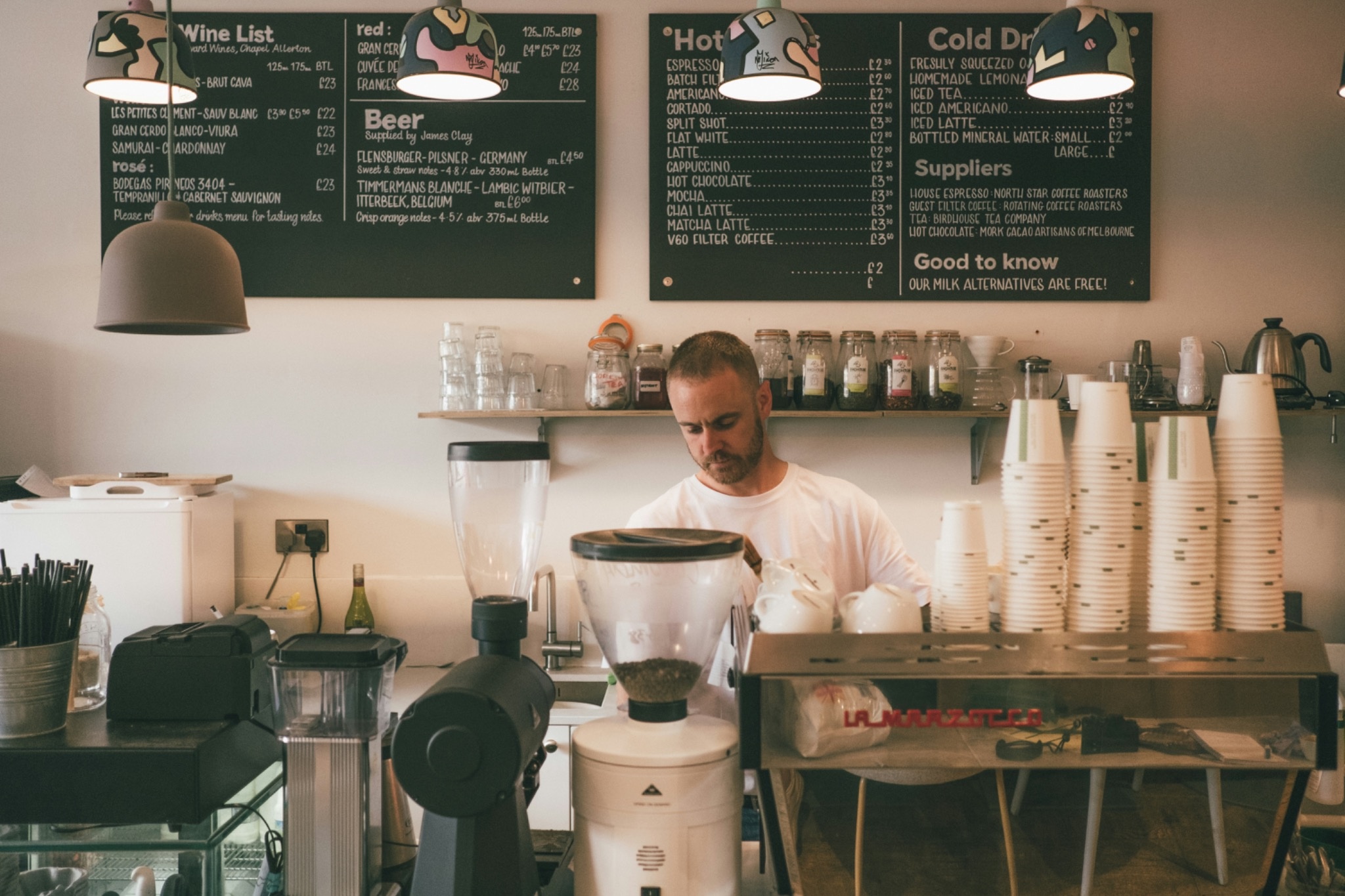
When designing the actual layout, think in stations rather than individual pieces of equipment. A well-designed espresso station has the machine, grinder, tamping mat, and knock box within a natural arm’s reach. The milk fridge is below or directly adjacent. The cup stack is within a quarter-turn. Nothing requires a full pivot.
A useful rule of thumb: draw out a barista’s path through your most common drink order. If their feet move more than two steps, redesign.
Tip: Hire a foodservice equipment consultant or a cafe designer before finalizing your layout. Even a single two-hour session can save you from a costly mistake. They know where first-timers build in errors, and they’ve seen every layout problem you’re about to encounter for the first time.
A few things that regularly get overlooked in BOH planning:
- Drainage. Make sure floor drains are positioned to handle spills and cleaning runoff from where your equipment actually lives, not where your architect assumed it would live.
- Ventilation. Espresso machines produce steam. Dishwashers produce steam. A poorly ventilated BOH gets hot fast. This affects your team and your equipment. Plan for it early.
- Power runs. Know the amperage draw of every piece of equipment before your electrician finishes rough-in. Adding circuits after walls are closed is expensive and avoidable.
- Storage height and accessibility. Frequently used supplies should be at counter height or below. Rarely used items can go high. Don’t put your most-reached-for things in the least-convenient spot just because there’s a shelf there.
Open with intention, not inventory
The cafes that struggle are usually the ones that opened with too much equipment they didn’t need, a layout that made sense on paper but not in practice, and no plan for maintenance when something broke. The cafes that thrive tend to be the ones that started simpler, moved smarter, and designed their space around how people actually work.
You don’t need every gadget on day one. You need the right pieces, in the right places, with the right support behind them. Start there, and build from a foundation that actually holds.