
Coffee Shop Email Marketing: A Practical Guide for Independent Owners

There's a moment every coffee shop owner knows well — a customer who came in three times a week suddenly disappears. You don't know if they moved, if something changed, or if they just found somewhere new. You have no way to reach them.
That's the core problem email marketing solves.
Unlike social media, where your posts reach a fraction of your followers on a good day, email lands directly in someone's inbox. They opted in. They want to hear from you. And when you show up there with something worth reading, you stay top of mind in a way no algorithm can touch.
This guide breaks down how independent coffee shops can build an email list from scratch, what to actually send, and how to turn a simple newsletter into a retention tool that keeps regulars coming back.
Why email works for coffee shops
Coffee shops run on habit. Most of your revenue comes from a relatively small group of people who show up on a predictable schedule. Email is one of the few tools that lets you speak directly to that group — and deepen the relationship beyond the transaction.
A few reasons it's worth the investment:
You own the list. Your Instagram following belongs to Instagram. Your email list belongs to you. If a platform changes its algorithm or shuts down, you still have a direct line to your customers.
The ROI is real. Email consistently outperforms other digital marketing channels in terms of return on investment — often cited at $36 for every $1 spent across industries. For local businesses with loyal customer bases, that number can be even stronger.
It fits small teams. You don't need a dedicated marketing person to run email well. A consistent cadence of one email every two to four weeks is enough to stay relevant without burning out.
Building your list
Before you can send anything, you need subscribers. The good news: your coffee shop already has traffic. The goal is converting that foot traffic into a list.
In-store sign-ups
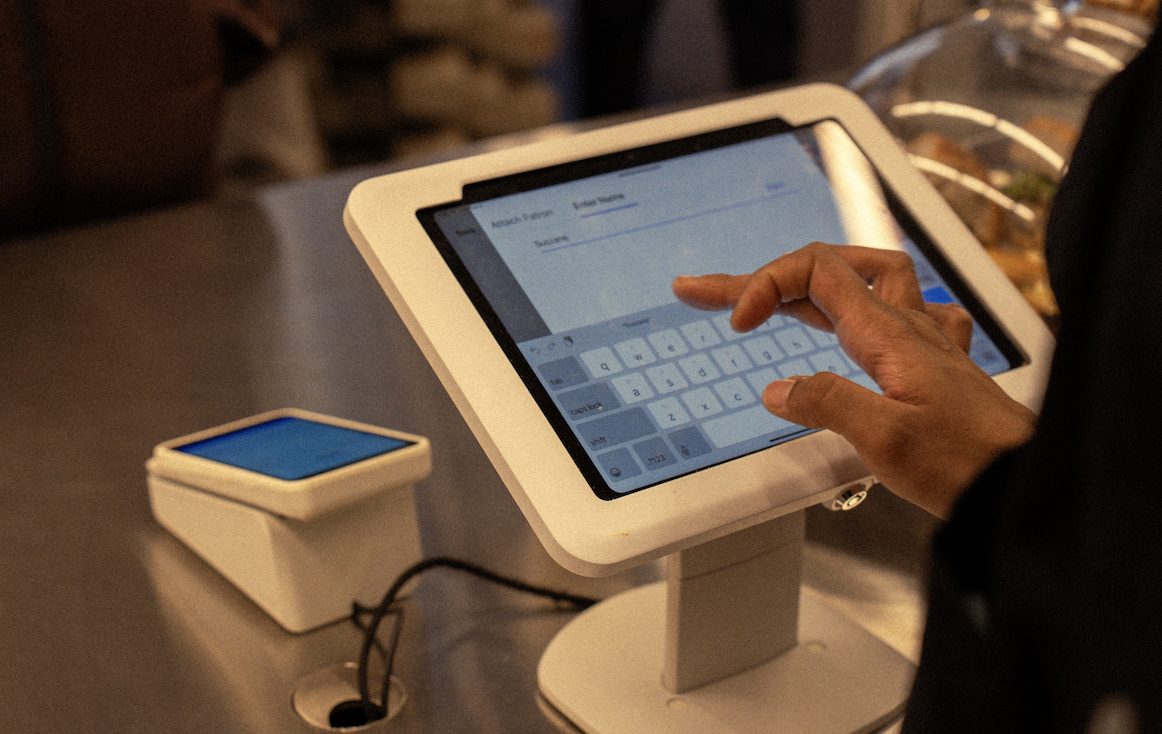
A simple paper sign-up sheet at the counter still works. So does a tablet or QR code that leads to a short sign-up form. Keep the ask minimal — name and email address is enough. If you collect birthdays, you can use them for a nice personal touch later.
Wi-Fi access
If your shop offers wi-fi, an email-gated login is one of the easiest ways to grow a list passively. A customer enters their email to connect, and you gain a subscriber. Just make sure your terms are clear and you're only emailing people who expect to hear from you.
Loyalty programs
If you run a loyalty program through your POS, you likely already have customer emails on file. This is a built-in head start — just make sure sign-up includes permission to receive marketing emails.
Online orders
Customers who order online are already comfortable giving you their contact information. Set up your online ordering to capture emails and allow opt-in during checkout.
Social media
A simple link-in-bio pointing to a sign-up page works well, especially if you can offer something in return — early access to a seasonal menu, a discount on their next visit, or a free drink on their birthday.
What to actually send
This is where most coffee shops get stuck. The list sits there, and no one knows what to write.
The answer is simpler than it sounds: write about what's happening. Your coffee shop is a living, changing place. There's always something worth sharing.
New seasonal menus
Launching a fall menu or a summer cold brew special? Email is the perfect place to announce it before you post on social. Give your subscribers a first look — it makes them feel like insiders.
Staff spotlights
People come to your shop for the people as much as the coffee. A short piece about a barista, their favorite drink to make, or how they got into coffee humanizes your brand in a way no product photo can.
Behind-the-scenes content
Where does your coffee come from? How do you dial in a new espresso? What does a Tuesday morning look like at 5am before you open? This kind of content builds genuine connection with customers who already love what you do.
Events and classes
Hosting a latte art workshop, a cupping, or a community event? Email should be the first place you announce it. It drives RSVPs and gives people a reason to come in outside their normal routine.
Honest updates
Changed your hours? Closing for a holiday? Moving to a new location? Your most loyal customers want to know before they show up and find a locked door. Email is the right place for operational updates that actually matter.
Occasional offers
A "bring a friend and both get a free drip coffee" kind of offer, sent a few times a year, is a low-pressure way to drive traffic. Keep it genuine and infrequent so it doesn't feel like every email is a coupon.
How to write emails people actually open
Most email marketing fails not because the product is bad, but because the email itself is — boring subject lines, walls of text, no clear point.
Here's what works for independent coffee shops:
Write like a person, not a brand. The best coffee shop emails sound like they came from the owner. First person, real voice, something specific. "We finally nailed our horchata latte. Here's how it happened." is more compelling than "Introducing our newest seasonal offering."
Keep subject lines short and specific. Under 50 characters. No clickbait. "New fall menu drops Friday" beats "You don't want to miss this." People who subscribed to your list want to hear from you — you don't need to trick them into opening.
One email, one point. Don't try to announce a new drink, mention a class, share a staff story, and promote a sale in the same email. Pick the most important thing and build the email around it. You can mention other things briefly at the bottom, but lead with one idea.
Short paragraphs, plain language. No one is reading a novel in their inbox. Short paragraphs, clear sentences, no jargon. If it takes more than 30 seconds to get to the point, edit it down.
End with a clear next step. What do you want the reader to do? Come in and try the new menu? Sign up for the class? Forward to a friend? Pick one action and make it easy to take.
How often to send
There's no universal answer, but for most independent coffee shops, once or twice a month is the right cadence. Enough to stay top of mind, not so much that you become noise.
The bigger risk is sending too infrequently. If someone signed up six months ago and you've never emailed them, they've forgotten who you are. A consistent schedule — even a simple monthly newsletter — builds trust over time.
If you're just starting out, commit to one email a month for three months. After that, you'll have a better sense of how your list responds and whether you want to increase frequency.
Tools to get started
You don't need anything complicated. Most email marketing platforms are designed for small businesses and have free tiers that work well until your list grows.
Look for a platform that integrates with your POS system so you're not manually importing contacts. If you're running Dripos, customer emails from loyalty sign-ups and online ordering flow directly into your marketing list — no extra steps.
Whatever platform you use, make sure you can:
- Segment by behavior (frequent visitors vs. one-time customers)
- See open rates and click rates so you know what's working
- Set up a simple welcome email that goes out automatically when someone subscribes
A simple starting framework
If you're building from scratch, start here:
- Welcome email — Goes out automatically when someone subscribes. Thank them, tell them what to expect, give them something useful (a recommendation, a little-known menu item, a story about the shop).
- Monthly newsletter — One main story or update, one secondary mention, one CTA. Keep it under 300 words.
- Seasonal launch — Sent 3–5 days before a new menu or special drops. Build a little anticipation.
- Birthday email — If you collected birthdays, a simple "happy birthday, come in for a free drink" email is one of the highest-performing emails any coffee shop can send.
That's four email types. That's a full email program. You can build from there.
Email marketing doesn't require a big budget or a marketing team. It requires showing up consistently, writing honestly, and giving your regulars a reason to stay connected between visits.
The coffee shop owners who do it well aren't sending elaborate campaigns — they're sending emails that feel like they came from a person who cares about the shop. That's something any independent owner can do.